
Interdependence
Reflections on American mythology and relational quantum physics

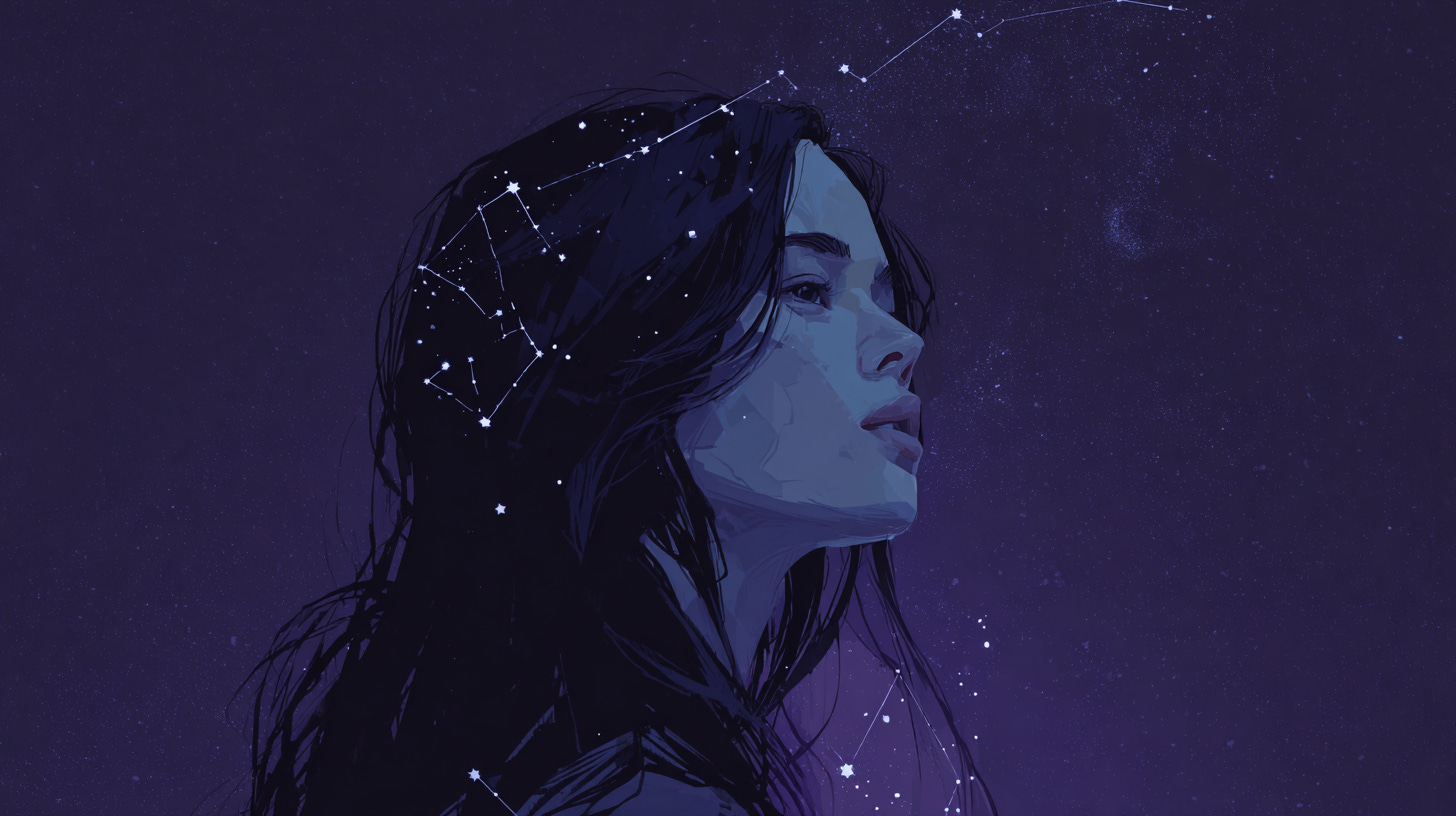
American mythology is rooted in independence. We raise the concept of individual freedom so high that we often forget that no one — and nothing — in the world is truly independent. Not really. We live in a global system of interconnectedness where our individual, communal, and national choices impact every other being in the system. When COVID hit us, we saw this first hand: my health impacted the health of my neighbors, friends and family. But instead of taking that principle and applying it to the commons by creating universal healthcare for our people, America used it as another wedge to divide us. We argued about masking and vaccines in relationship to individual sovereignty. I saw California tighten regulation and lock down public outdoor spaces, ticketing surfers and closing the parks that gave residents a critical outlet for mental and physical health. We removed the needs of physically healthy individuals from the risk equation, ignoring that humans need different things to survive a crisis. I saw Louisiana ignore all the warnings, hosting St Patrick’s day block parties well after lockdown and ushering in the first US death — an Uber driver in New Orleans who was misdiagnosed and ushered in the spread. We put the individual’s right to celebrate above our collective need to protect our most vulnerable. Then, when we began to lose beloved members of our music community, we couldn’t gather with our jazz funerals and second lines. We couldn’t alchemize our grief into a celebration of life. All these years later, we still haven’t acknowledged this collective grief — or the collective impact — it had on us and every human being on this planet.
Both sides had it wrong. We still do. In part because our country, our world, is not two-sided. It’s a multifaceted and complex system comprised of individual experiences that are also interdependent. But we don’t see things — or each other — in their startling complexity. Unknowns that vast feel unsettling and unstable, and yet that is the reality we have always lived in. For simplicity, or perhaps sanity, we have begun to believe that independence means freedom from the collective field of which we are all a part. We believe that individualism means putting ourselves above each other — an idea that is supported by how we structure our businesses, our economy and our politics. We have equated care for the commons — for each other — as socialism and communism and by doing so acting out a “winner takes all” story that has us “othering” each other any time we disagree.
I was talking to a friend about this recently — this argument we keep finding ourselves in whether it’s about banning books or figuring out what to do about AI regulation. She said that we need to stop thinking about bringing everyone into alignment on issues — we have different values and perspectives and that is valuable. It’s about creating harmony: bringing different viewpoints and ideas into a chorus that enriches us, that rings out and allows for each of us as individuals to consider how our voice shapes the landscape of those around us. As a singer, this idea resonated with me and reminded me that Thich Nhat Hanh said the next Buddha will be a sangha (a community). I imagine a chorus of voices, a counsel of elders, each sharing their unique lived experience and civil discourse about what to do as we chart our way in a world that is changing rapidly in part because of the choices small groups make that impact the global system.
Nothing exists alone. We think of reality in terms of objects — things that comprise an objective and measurable reality — but quantum physics tells us that we can only understand reality as the interactions between things. As “happenings” as quantum physicist Carlo Rovelli says.
We understand the world better not in terms of things but in terms of the interaction between things: how things interact with each other…Even as a human being, I am not a thing. I am a net of interactions between me and the world, the people who know me. It’s a more powerful way to grasp reality to focus on what interacts with what and how. The objects are the node of interaction, not the primary thing but the secondary thing. — Carlo Rovelli, from On Being with Krista Tippet
If we think of ourselves not as objects or sovereign individuals but part of a network of interactions — the happenings — in our lives, we can start to see that life is actually about interaction: it’s about happenings not things. Our lives are dependent on the things with which we interact because we exist through interaction. Our very lives are dependent on it because it is the fabric of everything from the atoms in our bodies to the way we run our cities to the stars in the cosmos. We have forgotten that life is not about the stuff we own or the stories we tell, but about how we act toward each other. How we love, how we fail, how we show up to repair, and how we forgive matters.
But as long as we believe that I exist outside of you and what I do doesn’t impact you, we won’t be able to see that tending to our relationships is the primary building block for life itself. And our relationships extend past our friends and family because we are in relationship with the earth, the ocean, the animals, the plants, and every human being on the planet. We all rely on each other but because we don’t acknowledge our interdependence, we are turning the world into a prisoner’s dilemma of extraction, dominance and suffering — everyone trying to “get theirs” and “take care of their own” while we move further into isolation, competition, and scarcity. That is what comes from the myth of separation.
What would it look like to turn instead toward each other? To take care of our neighbors, to bring back the village, to open our hearts to other cultures, religions and ways of being? I believe this starts with acknowledging our interdependence and finding ways to harmonize our differences. To find ways to share power, create reciprocity in how we relate to each other and think long term and systematically about the impacts of our choices. We can practice in our communities by asking for help and offering support — by seeing each other and being seen. We can expand by seeing the humanity in individuals who belong to groups with which we disagree or even hate. It serves us to ask where that hate came from and what system or power benefits from us holding it.
We need each other, now more than ever. And even though it’s a complex, and often overwhelming system, because it’s comprised of billions of small interactions, we can make a difference. As we change our inner worlds — our beliefs, behaviors, patterns, and biases — we can show up differently. How you show up even in the small interactions is a “happening” that impacts the whole system. There’s something beautiful and hopeful about the simplicity of that fact.